
Energetic, Enthusiastic and Persuasive: I (Influence) DISC Profile for Authors
 You really want to write a book. You know your energy is infectious and you have 101 ideas. When you talk about your ideas, you get a great response. But it is likely that you find it easy to get started but struggle to get finished.
In my series around DISC personal profiling ‒ and its impact on how you can best write your book and avoid the pitfalls many authors face ‒ today I am focusing on ‘I’ for Influence. If you have missed any of my previous posts, go and check out my other blogs.
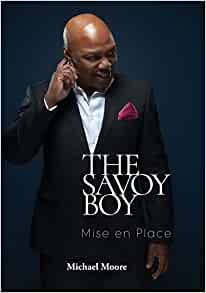
I'd like to introduce you to Michael Moore, author of The Savoy Boy, which was published in 2022. I will give you an insight into the highs and lows of his journey and how his profile impacted on the way we worked together.
‘I’ strengths = charismatic, enthusiastic and persuasive
High Is are charismatic and excel at building rapport with readers. As entrepreneurs, they are skilled at networking and marketing their work. Their enthusiasm can be infectious.
When I first spoke to Michael, I knew that ‘I’ was strong in his profile. I can recognise it a mile off. Extraverted, self-confident, and enthusiastic, Michael had already started writing his memoir, based on his experiences working at the Savoy Hotel in London. But he’d got stuck. The book was feeling overwhelming and unwieldy, and he had no idea what to do with it next.
I could tell his passion for the topic, as he was enthusiastically telling me about all of his stories. Although this is a good thing when you are writing a memoir or autobiography, stories need to go from the mouth onto the page!
When assessing how I could best help him, knowing his style helped, as high I profiles tend to talk aloud to seek clarity. And (unlike a high D), I knew he would need longer in our sessions to clarify his thoughts.
In addition, a high 'I' is likely to have a desire for approval, and may seek reassurance from others due to their need for external validation. That’s why Michael worked with me on a one-to-one basis, as this, or even a group programme, can help people with these tendencies to articulate and understand their ideas, and where they should take them.
‘I’ limitations = Impulsive, disorganised, overly talkative
High Is may struggle with maintaining focus on their writing or business tasks. To succeed, they should set clear priorities and goals to avoid distraction.
 Like high D profiles, high I profiles are big picture people, which means the detail can feel challenging. So that’s why, when Michael started his book journey with me as his book mentor, we met for a day to clarify his book idea.
After discussing many of his stories, we started to map the structure on a big piece of paper with lots of post it notes. I then supported him to stay with the detail, which is one of my strengths, as we went through the journey together.
There were times when the book needed extensive work, for example, when Michael struggled to remember aspects or the narrative jumped around too much, and Michael valued my feedback, as this was not a natural strength.
There were a few things we put into place to make it easier for Michael. To a certain extent, speaking his chapters aloud helped. He didn't enjoy the introverted style of sitting at a computer. His PA was able to support him with some areas he struggled with. For example, she typed up some of his handwritten and spoken notes.
Time management and focus can be a challenge for high 'Is', as they like variety and change, and say yes to opportunities. This means they can overcommit themselves if they are not careful. Having support in place is paramount.
A great strength of a high I profile is that they aren’t afraid of talking about what they do, which is great to galvanise a room full of potential readers who can champion them. But they can talk the talk, but not walk the walk if they’re not careful. Alongside my support, Michael worked alongside a PR partner to help promote his book once it was launched.
If you identify with the ‘I’ profile, how does this affect how you write your book?
- Ensure your book mentor can help pin down your idea early on. Being a naturally creative and enthusiastic individual, who can bring a lot of energy to the book writing process, there is a tendency of having multiple ideas. Without pinning down the core idea, it’s easy to jump around from one thought to another and never get your book written.
- You’ll likely thrive in a group, as you will work well in a supportive and collaborative environment. Brainstorming and positive interactions with other authors will keep your enthusiasm high.
- Get help with the details. Creating structure doesn’t come naturally, and there’s a tendency to have lots of different things in different places. It will benefit you down the line if you bring all of your content into one place and set up systems from day one.
- You may also find it useful to break down the book task into bite size chunks. This will help you to work in short sprints rather than the potentially overwhelming task of writing the entire book. Planning is something I cover when you work with me on a one-to-one basis.
- Make the most of your strengths as an energetic human being and, once you’ve got your structure nailed, you might find it easier to speak your book and have it transcribed. Alternatively, use the information you already have from other sources, such as webinars, talks and podcast interviews, that could be used to provide content. Another option is to work with a book mentor intensively to help you to bring out each element of your book and for them to write it alongside you.
- Talk about your book to build anticipation for its launch but make sure you stick to your deadlines, otherwise there will be a lot of talk and no book to show for your time and energy.
If you identify with the 'I' profile, how does this affect your readers?
Your enthusiastic stories and storytelling won’t be for everyone. Remember that your ideal readers may be another profile.
'D' readers will want practical steps and will prefer you to get to the point quickly.
'S' readers will value clarity and reassurance, especially if your book aims to help them to make a change.
'C' readers will want more detail than is comfortable to you, and data and evidence to support your content.
Getting support with your book
If you recognise yourself as a high I profile, then let’s chat about how I can support you as your Book Mentor.
You can book a call with me to discuss this and other options here: https://librotasbookfocus.youcanbook.me.
A word of caution
While DISC is a powerful tool, it's important to remember that personality profiling is just one among many methods for understanding human behaviour, and it's one of many tools I use. It offers valuable insights, but it should be used in conjunction with other approaches to achieve a comprehensive understanding of people. It's also worth noting I am a DISC trained practitioner through Thomas International and it helps to work with an expert to understand yourself better and know where you excel and where you might need help.
One final note, this isn't about putting people in boxes. Far from it. My intention is to help you to understand where you might excel and where you might get stuck (then you're more likely to get unstuck!). You'll probably resonate with a combination of two or three of the profiles I am mentioning in this series. I'd love to know what you've found most useful!