

12 Essential Rules for Writing a Non-Fiction Book
 Writing a non-fiction book is an incredible journey – but it can also feel overwhelming if you’re not sure where to start or how to stay on track. Whether you’re writing a non-fiction book to share your expertise, grow your business, or inspire change, crafting a meaningful book takes clarity, purpose, and focus.
That’s where my Smart Author System (SAS) comes in. It’s a proven, step-by-step process that helps business and non-fiction authors take their ideas from concept to launch.
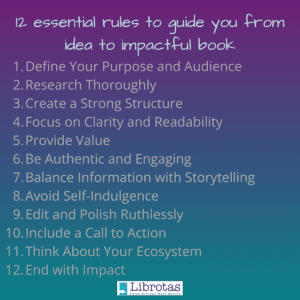
In this blog, I’ll share 12 essential rules that successful authors follow – and I’ll show you how these principles align with the stages of my system, giving you practical steps to move your book forward.
1. Define Your Purpose and Audience
Before you write a single word, ask yourself: Why am I writing this book, and who am I writing it for? Are you aiming to establish authority, solve a specific problem, or inspire your readers to take action? Knowing your purpose and your audience will keep you focused and ensure your book delivers value.
Pro Tip: Write down your book’s purpose and your ideal reader’s profile. Keep them in sight throughout the writing process to stay on track.
Smart Author System Connection: This ties directly to “Start with the End in Mind”, where we clarify your purpose, audience, and goals to create a strong foundation for your book.
2. Research Thoroughly
The best non-fiction books are built on solid research. Your readers need to trust that what you’re sharing is accurate and credible. Combine primary research – like interviews or surveys – with secondary research, such as books, studies, or articles, to strengthen your message.
Pro Tip: Create a dedicated folder to organise your research and sources. This will save time and keep you organised when citing references.
Smart Author System Connection: The “Subject” stage helps you refine your idea with focused research, ensuring your book addresses the needs of your audience.
3. Create a Strong Structure
Structure is the backbone of any successful book. A clear framework will keep your writing focused and help readers follow your ideas. Plan your chapters and ensure they flow logically, building on each other to create a complete, cohesive message.
Pro Tip: Start with an outline. It’s your roadmap for the book and ensures you don’t go off track.
Smart Author System Connection: The “Structure” stage provides tools like mind maps and chapter blueprints to help you organise your ideas effectively.
4. Focus on Clarity and Readability
Writing a non-fiction book isn’t about showing off your vocabulary – it’s about making your ideas accessible. Avoid jargon unless it’s absolutely necessary, and explain complex concepts in simple terms. Use bullet points, subheadings, and short paragraphs to keep readers engaged.
Pro Tip: Test your writing on someone outside your field. If they understand your ideas easily, you’re on the right track.
Smart Author System Connection: The “Scribing” stage focuses on clarity, ensuring your writing connects with readers while making consistent progress on your manuscript.
5. Provide Value
Non-fiction readers want solutions, insights, or inspiration – not fluff. Every chapter and section of your book should deliver something valuable, whether it’s practical advice, a fresh perspective, or an inspiring story.
Pro Tip: As you write, keep asking yourself, “What’s in it for the reader?” If a section doesn’t answer that, revise or remove it.
6. Be Authentic and Engaging
Your voice matters. Readers connect with authors who are genuine and relatable, so let your personality shine through. Share your experiences and don’t be afraid to use conversational language.
Pro Tip: Use stories and examples to illustrate your points. They make your book more engaging and memorable.
Smart Author System Connection: The “Secret Sauce” stage helps you uncover what makes your book unique and ensures your authentic voice comes through.
7. Balance Information with Storytelling
Facts are important, but stories make your book memorable. Weave in personal anecdotes, case studies, or real-world examples to bring your ideas to life and keep readers engaged.
Pro Tip: Start chapters with a compelling story or example. It draws readers in and sets the stage for your insights.
Smart Author System Connection: The “Story” stage helps you integrate storytelling into your book in a way that complements your expertise.
8. Avoid Self-Indulgence
Your book isn’t about you – it’s about serving your reader. Avoid overly self-congratulatory or tangential sections that don’t contribute to your book’s purpose.
Pro Tip: Ask yourself, “Does this serve the reader or the book’s main goal?” If it doesn’t, cut it.
9. Edit and Polish Ruthlessly
Good writing is rewriting. Once your draft is complete, revisit it with fresh eyes to refine clarity, consistency, and flow. A polished book reflects professionalism and builds trust with your readers.
Pro Tip: Take a break before editing. Distance helps you spot issues and improve your work.
Smart Author System Connection: The “Support” stage ensures you have the right team – coaches, editors, and beta readers – to refine your manuscript.
10. Include a Call to Action
What do you want readers to do after finishing your book? A clear call to action – whether it’s visiting your website, joining your community, or applying your advice – is essential to connecting with your audience beyond the page.
Pro Tip: Add practical steps or reflection questions at the end of each chapter to keep readers engaged and motivated.
11. Think About Your Ecosystem
Your book doesn’t stand alone – it’s part of a larger ecosystem that includes your business, brand, or mission. Consider how your book fits into your broader goals and plan accordingly.
Pro Tip: Start thinking about your promotion strategy while writing. It ensures a smooth transition from writing to marketing.
Smart Author System Connection: The “Sales” and “Show Up” stages help align your book with your goals, whether that’s growing your business, building your brand, or inspiring change.
12. End with Impact
Your conclusion is your chance to leave readers with a lasting impression. Reflect, summarise, or inspire action – whatever ties your message together and makes it memorable.
Pro Tip: Revisit your introduction as you write your conclusion to ensure everything feels cohesive and complete.
Summary
Writing a non-fiction book is about more than sharing information – it’s about creating impact. By focusing on your purpose, structuring your ideas, and connecting with your readers, you’ll craft a book that resonates and supports your goals.
The Smart Author System offers tools, strategies, and personalised guidance to help you write, finish, and launch your book with confidence. Ready to take the next step? Let’s work together to bring your book to life.
Book a call with me using this link.
Also, check out our upcoming events here.