

10 Essential Rules for Writing a Memoir
 Writing a memoir is a deeply personal and transformative experience. It’s not just about recounting events – it’s about crafting a story that resonates with others while staying true to your emotional journey.
A great memoir balances personal reflection with universal themes, creating a narrative that is both engaging and impactful.
Unlike an autobiography, which typically spans a whole life, a memoir focuses on specific themes, periods, or events, offering a more personal and reflective narrative.
Memoir writing often overlaps with non-fiction, but it comes with unique challenges. Drawing from my Smart Author System – a step-by-step process for business and non-fiction authors – these essential rules will help you craft a memoir that’s authentic, meaningful, and unforgettable.
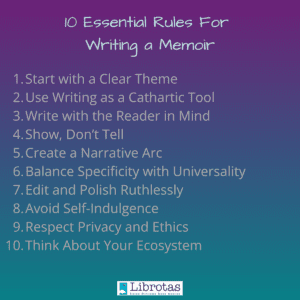
1. Start with a Clear Theme
A memoir doesn’t have to cover your entire life story – it’s about focusing on a specific theme, period, or journey that offers universal relevance. Picking one strong central theme gives your story purpose and cohesion.
Pro Tip: Before you start writing, summarise your memoir in one sentence. For example, “This is the story of how I rebuilt my life after loss.”
Smart Author System Connection: This aligns with the “Start with the End in Mind” stage, where we clarify your purpose and focus on the message you want to share with your readers.
2. Use Writing as a Cathartic Tool
Writing a memoir is often a cathartic process, allowing you to reflect on and make sense of your experiences. However, catharsis is just the beginning. Your emotional clarity will help transform your personal story into one that resonates universally.
While writing can be cathartic, stepping back to gain emotional distance is key to crafting a story that resonates universally. Reflecting on your journey from a place of growth allows you to share your experiences with clarity and intention.
Pro Tip: Use early drafts to process your emotions, then refine the story with your audience in mind.
Smart Author System Connection: In the “Self-Confidence” stage, we work on balancing personal vulnerability with the courage to share your story publicly.
3. Write with the Reader in Mind
While your memoir is deeply personal, it’s important to consider what your readers will gain from it. A successful memoir invites readers into your world while offering lessons, reflections, or inspiration they can relate to. Writing in the first person (“I”) helps create a sense of intimacy and authenticity, drawing readers into your experiences as if they are hearing them firsthand.
Pro Tip: Ask yourself, “Why would someone choose to read this?” Understand who your ideal reader is and what they want from your book. Keep your audience’s perspective front and centre, and embrace the personal nature of your story by writing from the "I" pronoun.
Smart Author System Connection: The “Story” stage helps you weave relatable elements into your narrative, ensuring readers connect with your journey.
4. Show, Don’t Tell
Readers want to experience your journey, not just read about it. Create vivid scenes that immerse them in your world by using dialogue, sensory details, and action. Your opening line or paragraph sets the tone for your memoir, so start with a vivid moment, compelling question, or evocative detail that immediately draws readers into your story.
Pro Tip: Replace general statements with specific moments. Instead of saying, “I was happy,” describe the smile you couldn’t stop or the way your laughter echoed.
Smart Author System Connection: The “Structure” stage helps you shape your memories into scenes that bring your story to life.
5. Create a Narrative Arc
Memoirs rely on storytelling techniques to engage readers. A clear narrative arc with a beginning, middle, and end is essential. Even though it’s based on real events, your memoir should have turning points and transformation.
While a chronological approach works for some memoirs, structuring your story around themes or emotional arcs can create a more compelling narrative.
Pro Tip: Outline key moments in your journey to create a roadmap for your writing.
6. Balance Specificity with Universality
Your memoir is about you, but its impact comes from universal resonance. Readers should see their own struggles, emotions, or triumphs reflected in your story.
Pro Tip: After drafting a piece, ask, “How might this resonate with someone who hasn’t lived my experience?”
Smart Author System Connection: The “Secret Sauce” stage helps you discover how your unique perspective and story can create a universal message that stands out.
7. Edit and Polish Ruthlessly
Great writing is rewriting. After completing your draft, take a step back and revisit your work with fresh eyes. Look for clarity, flow, and emotional resonance.
Feedback from trusted beta readers or experts can help you see blind spots and refine your narrative. Sharing early drafts with others ensures your memoir resonates as intended.
Pro Tip: Share your manuscript with trusted beta readers or a professional editor for feedback.
Smart Author System Connection: The “Support” stage ensures you refine your manuscript with the right team – editors, beta readers, or writing coaches.
8. Avoid Self-Indulgence
Your memoir should focus on the story’s meaning and impact, not just recounting events. Avoid overly self-congratulatory or self-pitying narratives. A helpful approach is to “write from a healed wound rather than an open wound”. You might need to tell your story warts and all, then edit it later.
Pro Tip: Ask yourself, “Does this section move the story forward or reveal something meaningful about the theme?” If not, cut it.
9. Respect Privacy and Ethics
Writing a memoir often involves sharing stories about others. Be mindful of how your words may impact those who feature in your story, and consider changing names or details when appropriate. In some cases, it may be necessary to seek legal advice or obtain permission from individuals mentioned in your book to avoid potential issues.
Pro Tip: Ask yourself, “Does sharing this story serve the narrative, or is it unnecessary?” Handle sensitive topics with care and integrity.
10. Think About Your Ecosystem
Your memoir doesn’t stand alone – it’s part of your larger ecosystem, whether that’s your business, personal brand, or creative work. Use your memoir as a bridge to connect with your audience on a deeper level.
Pro Tip: Include a call to action or link to further resources in the back of your book to engage readers beyond the final page.
Smart Author System Connection: The “Show Up” and “Sales” stages prepare you to align your memoir with your broader personal or professional goals.
Summary
Writing a memoir is about more than recounting events – it’s about sharing your truth in a way that inspires and connects. By embracing your vulnerability, focusing on your central theme, and keeping the reader in mind, you can craft a memoir that is both deeply personal and universally resonant.
The Smart Author System offers tools, strategies, and personalised guidance to help you write, finish, and share your memoir with confidence. Ready to bring your story to life? Let’s work together to create something unforgettable.
Book a call with me using this link.
Also, check out the Business Book Bites podcast, as we talk about many of the topics in this blog in our episodes.
I was thinking about writing a book through the advice of several people who have heard some accounts of my life and have said, “You should write a book.” I didn’t want to just write a chronicle about my life. Then a question just popped in my mind, “What about a memoir?” I immediately said to myself, “I don’t know the first thing about writing a memoir. As I thought about that, I realized that I could look it up online to see if there were some rules that I can follow in writing a memoir. That’s when I found your website. Your ten rules were just what I was looking for. Thank you for providing the rules that are needed to write a memoir. They were very enlightening. By the way, I am a published playwriter and have had four of my plays published with Silver Birchington Plays in England.
Yours Truly,
Jerry D. Seever
Thanks Jerry. Good luck with your memoir.